Sleep & materials
What Sets a Luxury Mattress Apart? Materials, Support, and Longevity
A luxury mattress is not simply a more expensive version of an ordinary one. Its distinction lies in the choices beneath the surface: the fibers and foams that shape its feel, the construction that holds those materials together, and the support that remains after years of use. Understanding those details makes it easier to compare a mattress on what it does—not just what its label promises.
Luxury is a construction story
Price can signal the use of premium materials, careful workmanship, or a more elaborate design. It can also reflect branding, distribution, and marketing. By itself, a high price does not tell you whether a mattress will suit your body or stay comfortable over time. The more useful question is what the mattress is made of, how its layers work together, and whether its support matches the way you sleep.
A mattress is a system. The cover, comfort layers, transition materials, support core, and edge construction each contribute to the experience. One layer may cushion the shoulders and hips; another may keep the body from sinking too deeply. The support core provides the underlying structure. If those elements are poorly matched, a plush surface can feel inviting at first but fail to offer the alignment or stability a sleeper needs.
That is why luxury mattress comparisons deserve more than a quick test in a showroom. A few minutes can reveal an initial impression, but not how a mattress will feel after a full night, how it responds when you change position, or how its materials are meant to be cared for. A close read of construction details can make the difference between buying a reassuring description and choosing a bed that fits your habits.
Start with the materials—and what they actually do
Mattress materials influence pressure relief, temperature feel, responsiveness, and durability. They should be assessed by their role in the finished mattress, not by a single word such as “natural,” “cooling,” or “premium.” The same material can perform differently depending on its thickness, density, processing, and position within the build.
Comfort layers shape the first impression
The top layers are usually where a sleeper notices softness, contouring, and surface temperature. Depending on the design, they may include foam, latex, wool, cotton, or other fibers. A soft surface can reduce the sharpness of pressure at contact points, but too much sink may make turning or getting out of bed feel harder. A firmer surface may feel stable but can leave some sleepers wanting more cushioning at the shoulder or hip.
Natural fibers are often used as part of a comfort layer or as a surface treatment. Wool, for example, has a springy fiber structure and can help manage moisture and warmth in bedding. It is not a substitute for a properly designed support core, and its presence alone does not establish that a mattress will sleep cool or suit every person. The full construction—and the sleeper’s room, bedding, and preferences—still matters.
Support materials provide the structure beneath
Under the comfort layers, a mattress needs a foundation that distributes weight and limits unwanted sagging. Support systems vary. Some use springs, some use latex or foam, and some combine several materials. Each has a different feel and response. Spring systems can provide a buoyant, familiar push-back; latex can feel resilient and quick to respond; foam can offer close contouring, depending on its formulation and density.
It is useful to ask not only what the support material is, but how it is configured. A description should clarify whether a layer is continuous or divided into zones, how thick it is, and what the manufacturer says it is designed to do. Labels such as “orthopedic” or “advanced support” may sound definitive, yet they do not replace clear construction information or a personal comfort assessment.
The cover and quilting are part of the experience
The cover is the point of contact between sleeper and mattress, and its fabric, quilting, and tension can subtly change the feel. A tightly quilted surface may feel more structured than a loosely cushioned one. A cover that can be removed may make some care tasks easier, but it is not necessarily washable; the label and care instructions should be checked before cleaning. Thoughtful finishing matters, but it cannot compensate for an unsuitable mattress underneath.
Support is personal, not a firmness number
Firmness ratings are useful as a starting point, not a universal measurement. One brand’s medium can feel different from another’s, and individual experience changes with body shape, weight distribution, sleep position, and personal preference. The aim is not to find the hardest or softest bed. It is to find a surface that feels comfortable while allowing the body to rest in a supported position.
Side sleepers often notice pressure at the shoulder and hip first. They may prefer enough cushioning to accommodate those areas without letting the torso sink excessively. Back sleepers may focus on whether the lower back feels supported and whether the surface remains comfortable over time. Stomach sleepers often prefer a more stable feel that helps prevent the midsection from dipping too far. These are useful patterns, not rules: a person’s comfort and body are individual.
Shared beds add another variable. Two people may have different preferred firmness levels, sleep positions, or sensitivities to movement. If possible, test the mattress together and consider whether motion from one side is noticeable on the other. A trial period can be valuable, but its terms matter: check the length, return fees, pickup arrangements, and any conditions before purchase.
Test in a way that reflects real sleep
When evaluating a mattress, lie down in your usual position rather than sitting on the edge for a brief moment. Give your shoulders, hips, and lower back time to settle. Change positions and notice whether movement feels easy or effortful. Pay attention to whether you feel pressure, excessive sink, or a sense that the surface is pushing you out of alignment.
A mattress also feels different with the foundation and bedding used at home. A thick topper, a rigid platform, or an incompatible base can change how the bed performs. Confirm the manufacturer’s requirements for the foundation and check that the frame is appropriate for the mattress. Comfort is produced by the whole setup, not the mattress in isolation.
Construction details worth comparing
Two mattresses can share a firmness description yet feel quite different. Their internal layers, material amounts, and assembly methods determine how they respond. Before choosing, look for a clear layer-by-layer account rather than a list of impressive-sounding terms.
- Layer order: Understand what sits nearest the sleeper, what provides transition, and what forms the support base.
- Material specifications: Look for the type and, where provided, density or thickness of foams, latex, fibers, and other components.
- Stitching and quilting: Find out how the layers are held in place and whether the construction is designed to reduce shifting.
- Edge design: Ask how the perimeter is built and whether it is intended to feel different from the center.
- Foundation compatibility: Check the recommended base, spacing requirements, and warranty conditions.
- Repair and replacement: Find out which components can be serviced, if any, and what the warranty does—and does not—cover.
Construction quality is not always visible from the outside. A polished cover can conceal a build that is difficult to assess, while an understated mattress may have detailed material documentation. Ask for specifics. If a seller cannot explain what the layers are or how the mattress should be supported, the uncertainty is itself useful information.
Temperature, moisture, and the whole sleep environment
People often describe a mattress as “hot” or “cool,” but temperature comfort depends on more than one material. The mattress, protector, sheets, comforter, room conditions, and the sleeper’s own preferences all contribute. A dense layer can feel different from an open, springy one, but no material guarantees a particular night-time temperature for everyone.
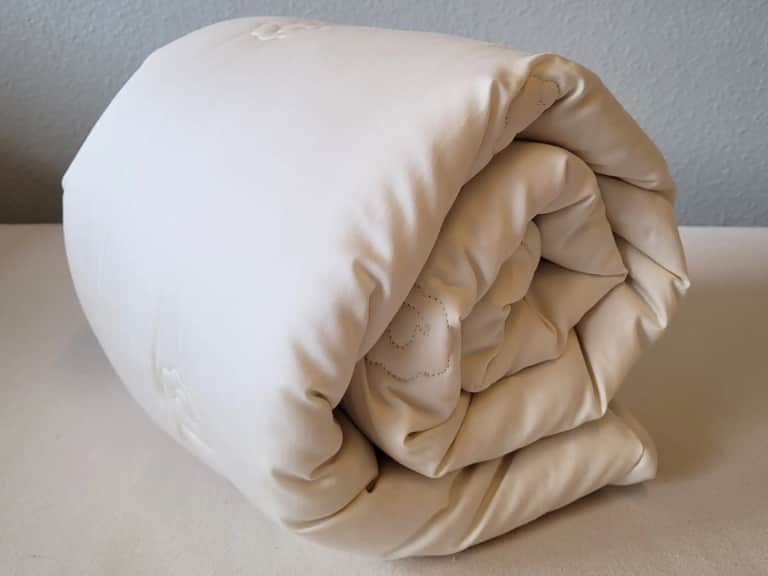
Wool is one fiber used in bedding for its ability to absorb moisture and provide insulation. It appears in comforters, pillows, blankets, and some mattress toppers. A wool layer may add a softer, more breathable-feeling surface, but it does not change every feature of the mattress beneath it. If the underlying bed is too firm, a thin layer may not provide enough cushioning; if it is already too soft, additional loft could make the sensation less stable.
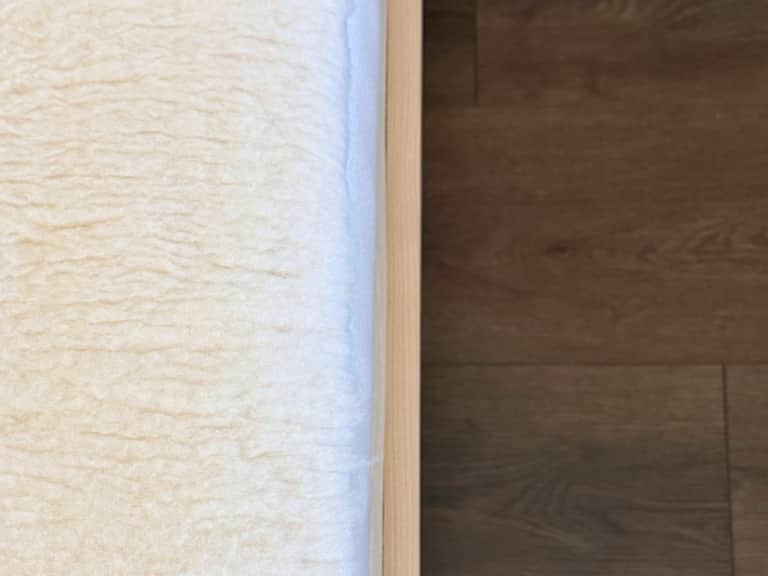
For someone considering a wool surface layer rather than a new mattress, the Happy Lamb Fleece is described as Premium Eco Wool woven into an organic cotton knit backing, with an approximate depth of one inch. Its flexible construction is intended for use as a topper. The care instructions call for spot cleaning and sunning during the initial felting period; later, machine care is limited to cold-water soak and spin cycles, not a standard wash cycle. Those details are worth weighing alongside the feel it may add.
A topper is a surface adjustment, not a repair for a worn-out mattress. It may help change the first impression or provide a modest amount of cushioning, but it cannot restore a sagging support core or correct an unsuitable foundation. Understanding that distinction can prevent a small accessory from being asked to solve a structural problem.
Longevity begins with realistic expectations
A luxury mattress should be judged not only by how it feels on day one, but by how its materials and construction are expected to hold up. All mattresses change with use. Foam and fibers can compress, upholstery can soften, and support components can lose some of their original feel. The pace varies according to materials, build, use, room conditions, and care. A premium price is not a guarantee against wear.
Before buying, read the warranty in full. It may address defined manufacturing defects but not normal softening, comfort preference, or damage caused by an unsuitable foundation. Look for the stated terms, exclusions, required proof of purchase, and any care or base requirements. A long warranty can sound reassuring, but its practical value depends on what it covers and how claims are handled.
Good everyday habits help protect the investment. Use a suitable mattress protector if compatible with the product, keep the mattress on its recommended base, and follow the maker’s instructions for rotation or turning. Not every mattress should be flipped; some have a designated top and bottom. Avoid bending or folding a mattress unless the manufacturer explicitly permits it, and never assume a removable cover can be laundered.
Cleaning guidance should be specific to the materials. Liquids can damage internal layers, and aggressive cleaning may affect adhesives or finishes. Treat stains promptly according to the maker’s directions, allow the surface to dry fully, and avoid applying heat or chemicals unless they are approved. If a mattress has an odor when new, follow the stated airing advice and seek product-specific support if the smell persists or causes concern.
Sustainability claims deserve a closer read
Natural fibers, organic inputs, and responsible sourcing can be meaningful considerations, but they are not interchangeable claims. A mattress may include an organic cover while using other materials in its core. A fiber may be traceable without the entire product being certified. Read what a certification applies to, who issued it, and whether it covers a material, a facility, or a complete product. Clear, limited claims are more informative than broad promises.
Longevity is also part of the environmental picture. A mattress that suits the sleeper and can be maintained appropriately may remain useful longer than one bought impulsively and replaced early. Yet durability is difficult to assess from marketing alone. Detailed specifications, transparent policies, repair options, and credible care guidance are better evidence than vague assurances that a product will last a lifetime.
Disposal belongs in the comparison, too. Before buying, ask whether the retailer offers removal or recycling and what that service includes. Local options vary, and not every mattress can be processed in the same way. Planning for the end of a product’s use is a practical part of responsible ownership, not an afterthought.
A buyer’s checklist for luxury mattresses
When comparing options, keep the decision grounded in questions that connect product details to everyday use:
- What is the exact layer order, and what role does each material play?
- Does the feel suit my usual sleep position and preferred degree of cushioning?
- Can I move comfortably and settle without feeling excessive pressure or sink?
- What foundation does the manufacturer require?
- How should the mattress be cleaned, rotated, or otherwise maintained?
- What does the trial policy allow, and what costs or conditions apply to a return?
- Which issues are covered by the warranty, and which are considered normal wear?
- Are material and certification claims specific enough to verify?
- What will happen to the mattress when it is no longer usable?
The answers may point toward a mattress that is not the most expensive or the most heavily promoted. That is the point. A sound choice begins with a match between construction and the sleeper, then considers care, value, and the credibility of the information supplied.
The measure of luxury is fit
Luxury in a mattress is not a single material or a dramatic label. It is a set of decisions: a thoughtful balance between surface comfort and underlying support, clear construction, suitable materials, and instructions that make long-term care possible. A mattress can be beautifully made and still be wrong for a particular sleeper. Conversely, a simpler design may deliver the comfort and stability someone actually needs.
Take time to compare the layers, test the feel in a realistic way, and read the policies before committing. Consider sleep position and individual comfort preferences, but treat general guidance as a starting point rather than a prescription. And remember that the mattress is only one part of the sleep environment: the base, protector, bedding, and room all contribute to the result.
The best luxury mattress is ultimately not the one with the most elaborate description. It is the one whose materials and construction make sense for your body, whose support feels right night after night, and whose care requirements are practical enough to follow. That is a quieter definition of luxury—and a more useful one.